Skip to content

Your Perfect Safari, Seamlessly Designed.

You cannot leave Africa. It is always with you, there inside your head.

Bwindi Impenetrable National Park

Especially as Bwindi hosts one of just two populations of the magnificent mountain gorilla found worldwide, she is really unique.

Bwindi Impenetrable National Park: The Ultimate Forest & Gorilla Trekking Guide

Bwindi Impenetrable National Park is not just a destination for gorilla trekking—it is one of Africa’s most ancient and biologically rich forests. Located in southwestern Uganda, this dense rainforest is part of the Albertine Rift and is recognized as a UNESCO World Heritage Site due to its exceptional biodiversity.

A Bwindi Impenetrable National Park gorilla trekking experience begins with understanding the forest itself. The mountain gorillas are only one part of a much larger ecosystem that has evolved over thousands of years. The forest defines the experience—its density, its atmosphere, and its layered life systems shape everything you encounter.

Bwindi is often described as “impenetrable,” and that description is accurate. The terrain is rugged, the vegetation is thick, and the environment feels completely untouched. This is not a typical safari landscape; it is a place where nature dominates, and where every step draws you deeper into a living, breathing wilderness.

The Structure and Layers of the Forest

The defining feature of Bwindi Impenetrable National Park is its complex forest structure. The rainforest is made up of multiple layers, each supporting different forms of life. Towering canopy trees form the upper layer, blocking much of the sunlight and creating a cool, shaded environment below. Beneath this canopy lies a dense mid-layer of smaller trees, vines, and shrubs, followed by a thick forest floor covered in ferns, moss, and decaying vegetation.

This layered structure is what gives Bwindi its “impenetrable” character. Movement through the forest is not straightforward; it requires navigating around roots, pushing through vegetation, and adjusting to constantly changing terrain. The density creates a sense of immersion that is unlike any open savannah.

The forest floor is alive with activity, even if it is not always visible. Insects, small mammals, and plant life all contribute to a complex ecological system that sustains larger species, including gorillas.

Biodiversity Beyond Gorillas

While Bwindi Impenetrable National Park gorilla trekking is the main attraction, the forest itself is one of the most biodiverse habitats in Africa. It is home to hundreds of tree species, many of which are endemic to the region. The plant life alone creates a rich and varied environment that supports an extraordinary range of wildlife.

The forest hosts multiple primate species, including chimpanzees, colobus monkeys, and L’Hoest’s monkeys. Birdlife is equally impressive, with numerous endemic species that attract birdwatchers from around the world. Reptiles, amphibians, and countless insect species add to the ecological complexity.

What makes Bwindi unique is how all these elements coexist within a relatively compact area. The density of life is not always obvious at first glance, but as you spend time in the forest, its richness becomes increasingly apparent.

The Atmosphere of Bwindi Forest

The atmosphere inside Bwindi Impenetrable National Park is one of its most powerful features. The forest is often covered in mist, especially in the early morning, creating a sense of mystery and depth. Light filters through the canopy in narrow beams, illuminating patches of greenery while leaving other areas in shadow.

The soundscape is equally immersive. Bird calls, insect activity, and the distant movement of animals create a constant background of natural sound. Unlike open landscapes, where visibility dominates, Bwindi engages multiple senses at once.

Humidity, temperature, and texture all contribute to the experience. The forest feels alive, constantly shifting and responding to weather and time of day. This sensory richness is what makes Bwindi more than just a location—it is an environment you feel as much as you see.

Gorilla Trekking in the Context of the Forest

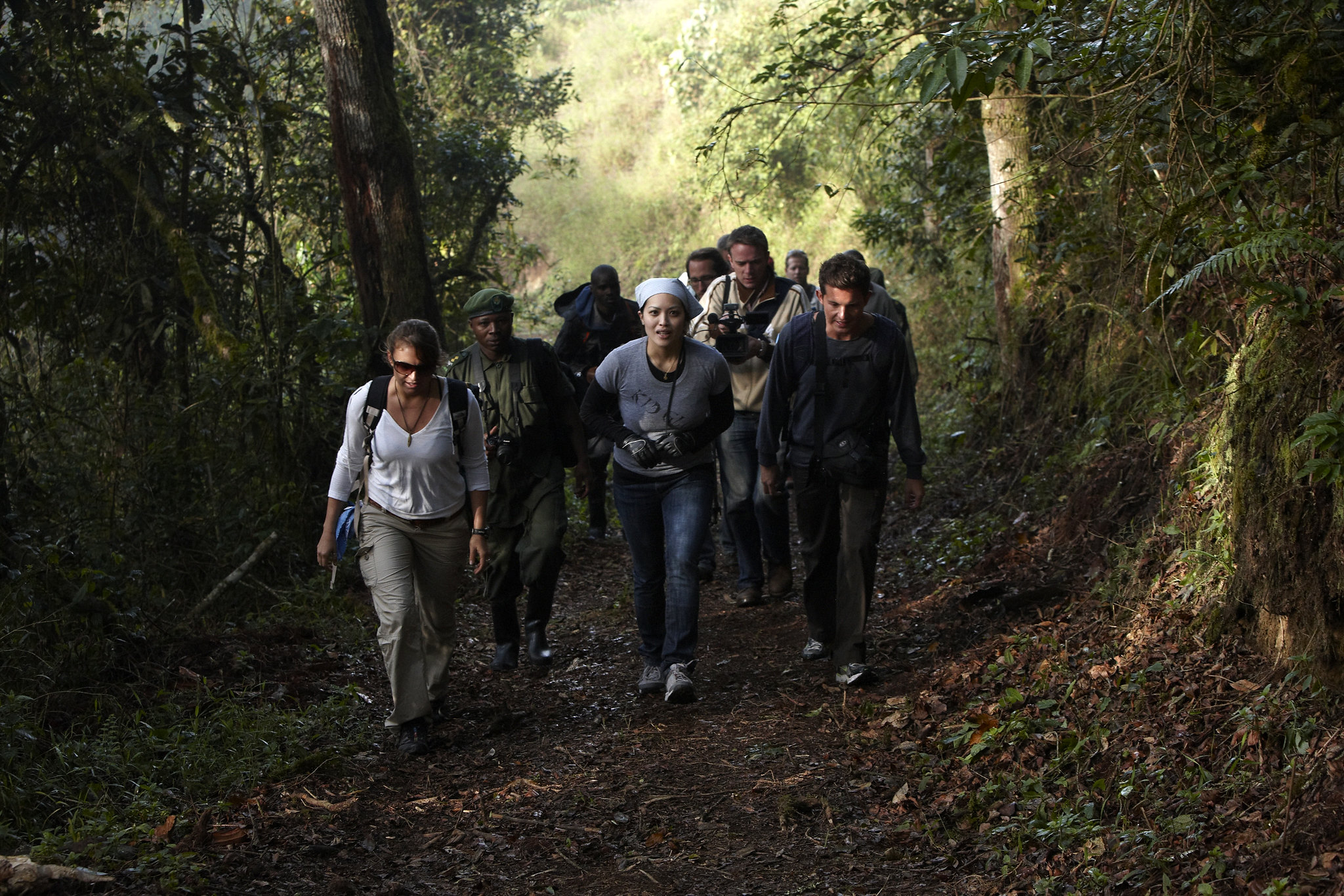
A Bwindi Impenetrable National Park gorilla trekking experience is deeply influenced by the forest environment. The trek is not simply a walk to see gorillas; it is a journey through one of the most complex ecosystems in Africa.

The difficulty of the trek varies depending on where the gorillas are located. Rangers and trackers move ahead to locate the groups, and your path is shaped by their position. This means no two treks are the same. Some routes are steep and physically demanding, while others are more moderate.

When you finally encounter a gorilla family, the forest setting enhances the experience. The surrounding vegetation frames the scene, creating an intimate and almost cinematic moment. The silence, broken only by natural sounds, makes the encounter feel even more powerful.

The one-hour viewing limit ensures minimal disturbance to the gorillas while preserving the quality of the experience.

The Four Sectors of Bwindi

Bwindi Impenetrable National Park is divided into four main sectors: Buhoma, Ruhija, Rushaga, and Nkuringo. Each sector offers access to different parts of the forest, with varying terrain, altitude, and vegetation density.

Buhoma is the most established sector, with relatively accessible trails and well-developed infrastructure. Ruhija sits at a higher altitude, offering cooler temperatures and a different forest composition. Rushaga has the highest number of gorilla families, increasing permit availability, while Nkuringo is known for its steep terrain and dramatic views.

Each sector provides a distinct forest experience, allowing you to choose based on your preferences and level of physical preparedness.

Best Time to Experience the Forest

The forest environment of Bwindi Impenetrable National Park changes throughout the year. The dry seasons, from June to September and December to February, offer more stable trekking conditions with less mud and easier navigation.

The wet seasons bring heavier rainfall, making trails more challenging but also enhancing the forest’s lushness. During these periods, the vegetation is at its most vibrant, and the atmosphere becomes even more dramatic with increased mist and moisture.

Choosing the best time depends on whether you prioritize ease of movement or the full intensity of the rainforest environment.

Conservation and the Role of the Forest

The survival of mountain gorillas is directly linked to the protection of Bwindi Impenetrable National Park. Conservation efforts focus not only on the animals but on preserving the entire forest ecosystem.

Tourism plays a critical role in this process. Gorilla trekking permits contribute to conservation funding and support local communities. This creates a sustainable model where protecting the forest also benefits the people who live around it.

Understanding this relationship adds depth to your visit, highlighting the importance of maintaining the delicate balance between tourism and conservation.

Preparing for the Forest Experience

Preparing for a Bwindi Impenetrable National Park gorilla trekking experience requires attention to the forest environment. Proper hiking boots, waterproof clothing, and long sleeves are essential due to mud, vegetation, and insects.

Physical fitness is important, as the terrain can be demanding. However, porters are available to assist, making the experience more accessible. Carrying water, snacks, and protective gear ensures comfort throughout the trek.

Being mentally prepared for unpredictability is also important. The forest does not operate on a fixed schedule, and flexibility enhances the overall experience.

Why Bwindi Forest is Unmatched

What makes Bwindi Impenetrable National Park truly exceptional is the combination of ecological complexity and emotional impact. The forest is not just a backdrop—it is the core of the experience.

Every element, from the dense vegetation to the hidden wildlife, contributes to a sense of discovery. The environment demands engagement, drawing you into a deeper connection with nature.

Final Perspective

A Bwindi Impenetrable National Park gorilla trekking journey is ultimately about the forest as much as the gorillas. It is an exploration of one of Africa’s most ancient ecosystems, where every step reveals something new.

For travelers seeking an experience that combines adventure, biodiversity, and profound natural beauty, Bwindi stands as one of the most powerful destinations in Africa.

Bwindi Impenetrable National Park Guides

ASK OUR SPECIALISTS ANYTHING

Back To Top