What to Expect on a Gorilla Trekking Safari
Introduction to the Gorilla Trekking Experience
A gorilla trekking safari is one of the most profound wildlife encounters you can experience, placing you face-to-face with mountain gorillas in their natural forest habitat. Unlike traditional safaris that rely on vehicles and open plains, this journey takes you deep into dense rainforest, where every step is guided by instinct, tracking expertise, and the rhythm of the wild. The experience typically takes place in protected areas such as Bwindi Impenetrable National Park in Uganda or Volcanoes National Park in Rwanda, where carefully habituated gorilla families are monitored and protected.
The anticipation begins long before you see the gorillas. It builds from the early morning briefing, through the trek into the forest, and finally peaks when you come within close proximity of a gorilla group. This layered journey is what makes gorilla trekking unique. It is not just about the destination, but about the process of entering a world that operates entirely on natural terms. Each trek is different, shaped by terrain, weather, and the movement of the gorillas themselves. This unpredictability adds to the authenticity and intensity of the experience.
The Early Morning Start and Briefing
Your trekking day begins early, often just after sunrise, when you arrive at the park headquarters for registration and briefing. This initial stage is more than just administrative; it sets the tone for the entire experience. Rangers and guides explain the rules of trekking, safety protocols, and what you should expect once inside the forest. These guidelines are essential for protecting both visitors and gorillas, ensuring that interactions remain respectful and non-intrusive.
You will be assigned to a specific gorilla family along with a small group of other trekkers. The allocation is based on several factors, including fitness level and group size, to ensure that the trek is manageable and aligned with your physical ability. Each group is accompanied by experienced guides and trackers who have deep knowledge of the forest and the behavior of the gorillas.
There is a sense of quiet anticipation during this stage. Everyone understands that they are about to step into one of the most intimate wildlife encounters on Earth. The atmosphere is focused, respectful, and filled with expectation.
Entering the Forest: The Trek Begins
Once the briefing is complete, you travel to the starting point of your trek, where the real journey begins. The forest immediately surrounds you with its density, humidity, and soundscape. The terrain can vary significantly, from relatively gentle slopes to steep and challenging inclines. Thick vegetation, tangled vines, and uneven ground require careful navigation, making the trek both physically engaging and mentally immersive.
The pace is steady but adaptable, guided by trackers who move ahead to locate the gorillas based on their last known position. Communication between trackers and guides ensures that your group is directed efficiently, although there is no guarantee of how long the trek will take. It could be an hour or several hours, depending on how far the gorillas have moved.
Along the way, you begin to notice the forest’s complexity. Bird calls echo through the canopy, insects move through the undergrowth, and occasional glimpses of other wildlife remind you that this is a fully functioning ecosystem. The journey itself becomes part of the experience, drawing you deeper into an environment that feels both ancient and alive.
The Moment of Contact: Finding the Gorillas
The transition from trekking to encountering gorillas is often subtle but powerful. You may first hear them before you see them—rustling leaves, low vocalizations, or the sound of branches being broken as they feed. Guides signal for silence, and the group moves carefully forward until the gorillas come into view.
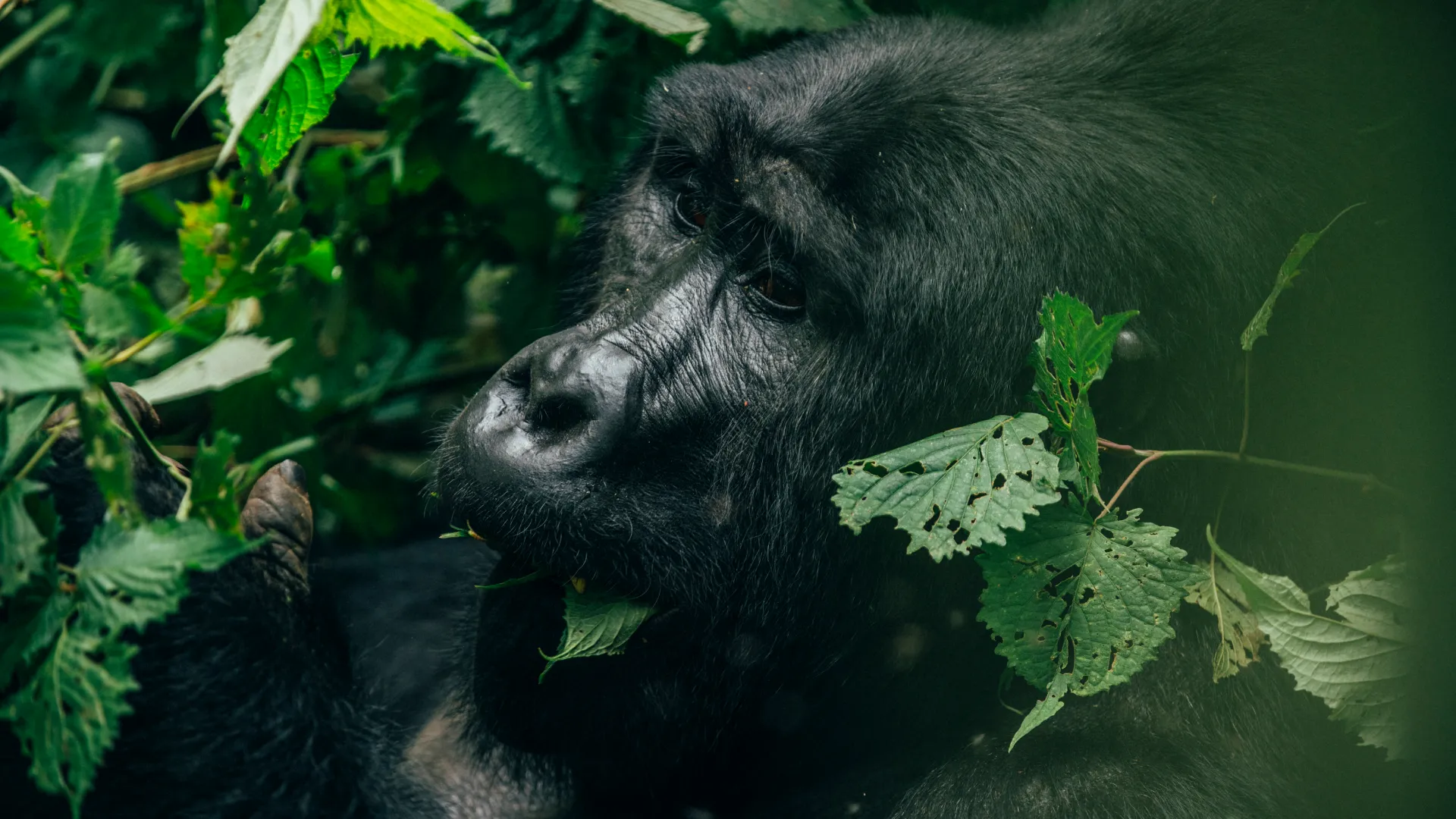
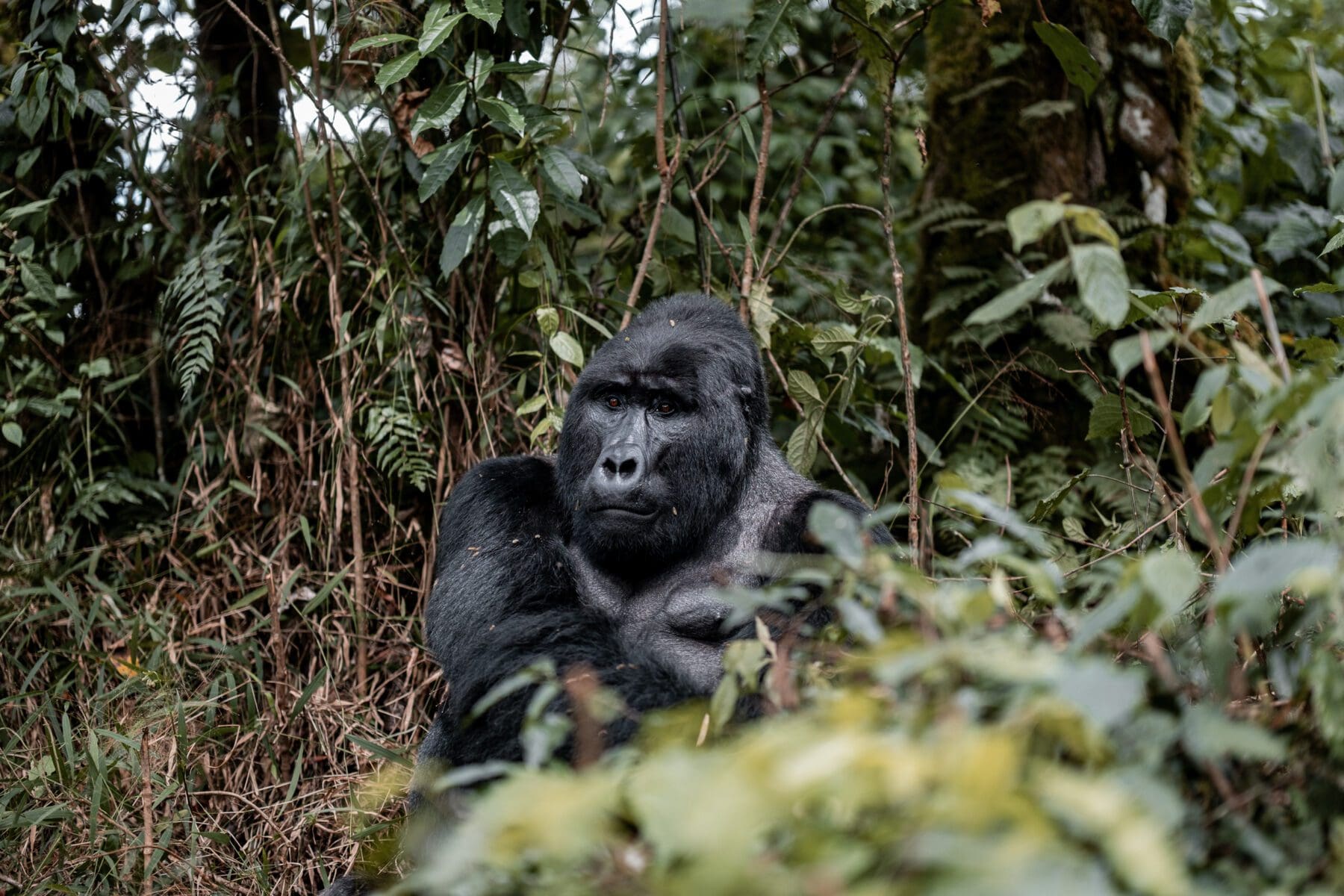
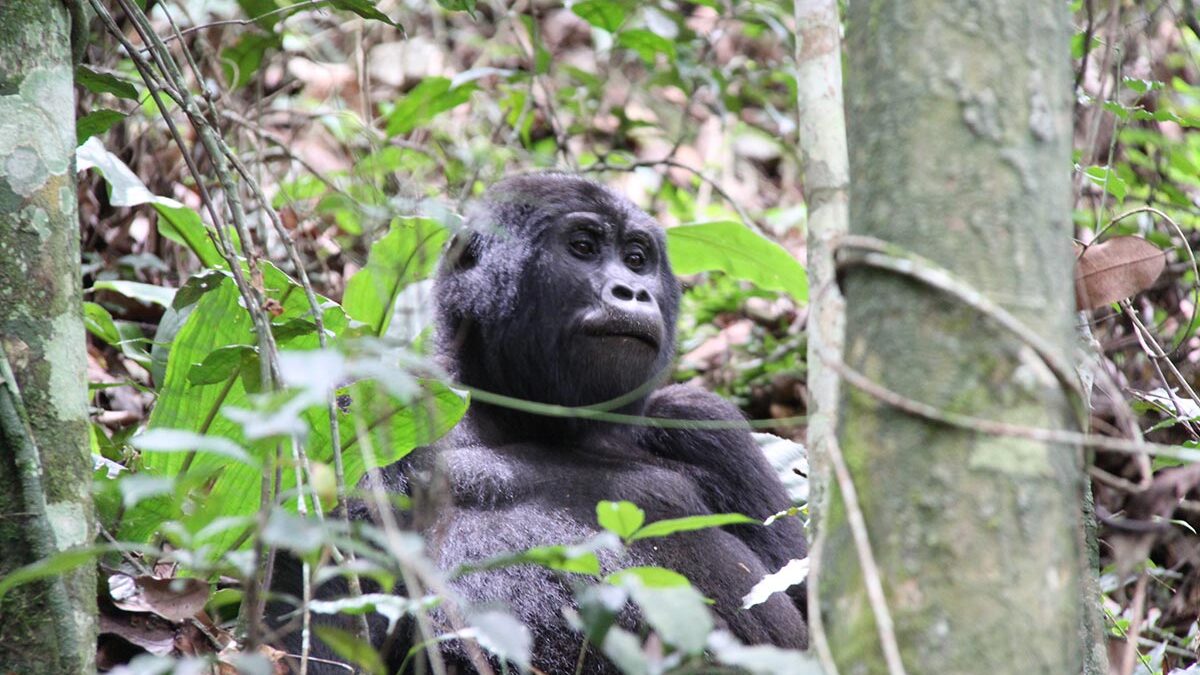
The first sight of a mountain gorilla is unforgettable. Whether it is a massive silverback resting in the shade or a playful juvenile moving through the foliage, the presence of these animals is both commanding and deeply moving. The distance between you and the gorillas is surprisingly close, often just a few meters, yet there is a clear boundary of respect maintained at all times.
This moment carries a weight that is difficult to describe. It is not just about seeing an animal, but about recognizing a connection that feels both immediate and profound. The gorillas continue their natural behavior, largely undisturbed by your presence, allowing you to observe them as they truly are.
The One-Hour Encounter
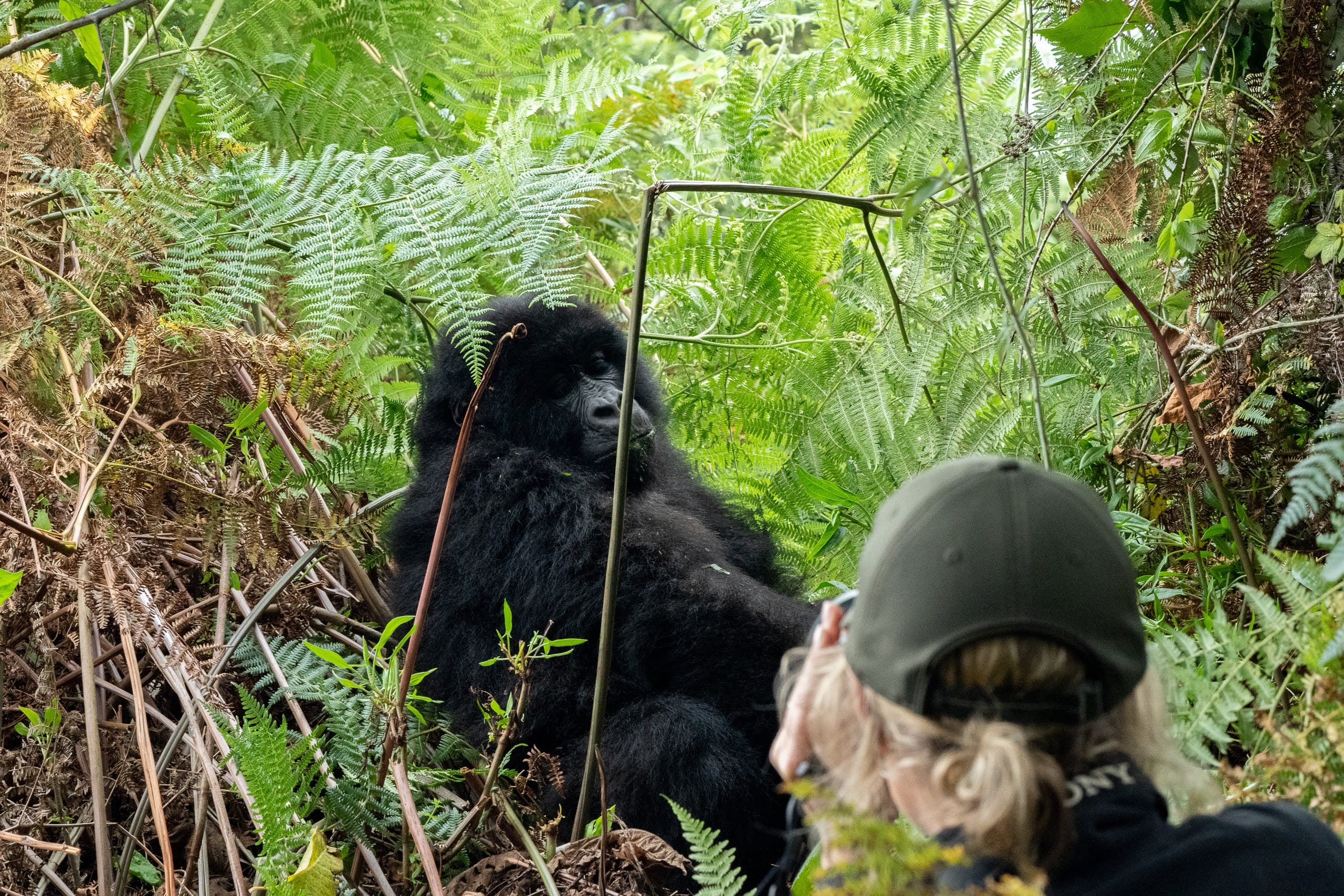
Once the gorillas are located, you are allowed one hour in their presence. This time is carefully regulated to minimize stress on the animals while still providing a meaningful experience for visitors. Within this hour, you have the opportunity to observe a wide range of behaviors, from feeding and grooming to social interactions within the group.
The silverback, often the focal point of the group, exudes authority and calm, overseeing the family with a quiet strength. Females care for their young, while juveniles engage in playful activity that reveals the lighter side of gorilla life. These interactions provide insight into complex social structures that closely resemble human family dynamics.
Photography is allowed, but it quickly becomes clear that the experience goes beyond capturing images. Many visitors find themselves lowering their cameras, choosing instead to absorb the moment fully. The stillness of the forest, combined with the presence of the gorillas, creates an atmosphere that feels almost meditative.
Physical and Emotional Impact
Gorilla trekking is both physically demanding and emotionally intense. The trek itself can test your endurance, particularly in areas with steep terrain and dense vegetation. However, the physical effort often enhances the emotional reward, as reaching the gorillas feels like an achievement earned through persistence.
Emotionally, the experience can be overwhelming. Being so close to animals that share so much of our genetic makeup creates a sense of connection that is rare in wildlife encounters. There is a quiet understanding in the way gorillas observe their surroundings, a depth of awareness that resonates on a human level.
Many visitors describe the experience as transformative, not because of a single dramatic moment, but because of the cumulative impact of being present in such an environment. It is an encounter that stays with you long after the trek has ended.
Safety and Behavior Guidelines
Safety is a fundamental aspect of gorilla trekking, and strict guidelines are in place to protect both visitors and gorillas. Maintaining a safe distance, avoiding sudden movements, and following the instructions of guides are all essential components of the experience. If a gorilla approaches you, remaining calm and still is the best response.
Health precautions are also important, as gorillas are susceptible to human diseases. Visitors are required to follow hygiene protocols and may be restricted from trekking if they show signs of illness. These measures ensure that the gorillas remain healthy and protected.
The presence of trained rangers provides an additional layer of security. Their understanding of gorilla behavior allows them to manage interactions effectively, ensuring that the experience remains safe and respectful for everyone involved.
The Role of Guides and Trackers
Guides and trackers are central to the success of a gorilla trekking safari. Their expertise goes beyond navigation, encompassing deep knowledge of gorilla behavior, forest ecology, and tracking techniques. They interpret signs such as footprints, broken vegetation, and vocalizations to locate the gorillas, often covering large distances before the group arrives.
Their role also includes educating visitors, providing context for what you are observing, and ensuring that guidelines are followed. This combination of skill and knowledge enhances the overall experience, turning a simple encounter into a deeper understanding of the ecosystem.
The relationship between guides and the forest is built over years of experience, creating a level of insight that cannot be replicated. Their presence adds both safety and richness to the journey.
Weather and Environmental Conditions
Gorilla trekking takes place in rainforest environments, which means that weather conditions can change rapidly. Rain is common, even during drier months, and the forest floor can become muddy and slippery. This adds to the challenge of the trek but also contributes to the lush, vibrant character of the landscape.
Humidity levels are typically high, and temperatures can vary depending on elevation. Being prepared for these conditions is essential, as it ensures that you remain comfortable and focused throughout the trek. The environment itself is part of the experience, shaping the way you move, observe, and interact with the forest.
What Happens After the Trek
After your hour with the gorillas, the group begins the return journey, often retracing steps through the forest. The atmosphere on the way back is different, marked by a sense of accomplishment and reflection. Conversations tend to be quieter, as each person processes the experience in their own way.
Upon returning to the starting point, there is often a moment of recognition and celebration, acknowledging the effort and the encounter. The rest of the day is typically spent resting and reflecting, as the physical and emotional intensity of the trek settles.
The memory of the encounter remains vivid, shaped not just by what you saw, but by how you experienced it. Gorilla trekking is not easily summarized; it is something that unfolds gradually, leaving a lasting impression.
Why Gorilla Trekking is Unlike Any Other Safari
What sets gorilla trekking apart from other wildlife experiences is its intimacy and depth. There are no barriers, no vehicles, and no distance separating you from the animals. Instead, there is a shared space where observation becomes interaction, even if unspoken.
The experience is defined by respect—for the animals, the environment, and the process that makes such encounters possible. It is a reminder of the interconnectedness of life and the importance of conservation in preserving these moments for future generations.
A gorilla trekking safari is not just an activity; it is a journey into one of the last remaining wild places where humans can connect directly with nature in its purest form.