Calving Season in the Serengeti: Everything You Need to Know
Understanding the Serengeti Calving Season
The Serengeti calving season is one of the most extraordinary phases of the Great Migration, defined by a dramatic surge of new life across the southern plains. This period typically unfolds between late January and March, when vast herds of wildebeest concentrate in nutrient-rich grasslands to give birth. The timing is not random but closely tied to rainfall patterns that produce short, mineral-dense grasses ideal for lactating mothers and rapidly growing calves. What emerges is a synchronized birthing event of astonishing scale, where hundreds of thousands of calves are born within a remarkably short window. This natural strategy overwhelms predators with sheer numbers, ensuring that enough newborns survive to sustain the population.
The landscape during this time becomes a living nursery, where the rhythm of life is visible in every direction. Mothers give birth in open plains where visibility is high, allowing them to detect predators from a distance. Within minutes of birth, calves attempt to stand and walk, driven by instinct to keep up with the herd. This immediate mobility is critical because vulnerability is highest in the first hours of life. The calving season is not only about birth but also about survival under constant pressure, making it one of the most intense and emotionally charged wildlife experiences in the Serengeti.
Where Calving Takes Place in the Serengeti
The primary calving grounds are located in the southern Serengeti and the Ndutu region, extending into the Ngorongoro Conservation Area. These areas are characterized by open plains and short grasses enriched by volcanic soils, which provide essential nutrients for grazing herbivores. The flat terrain plays a crucial role in predator detection, allowing herds to maintain visual awareness across long distances. This environment is particularly suited to newborn calves, as it reduces the likelihood of ambush compared to wooded or tall grass areas.
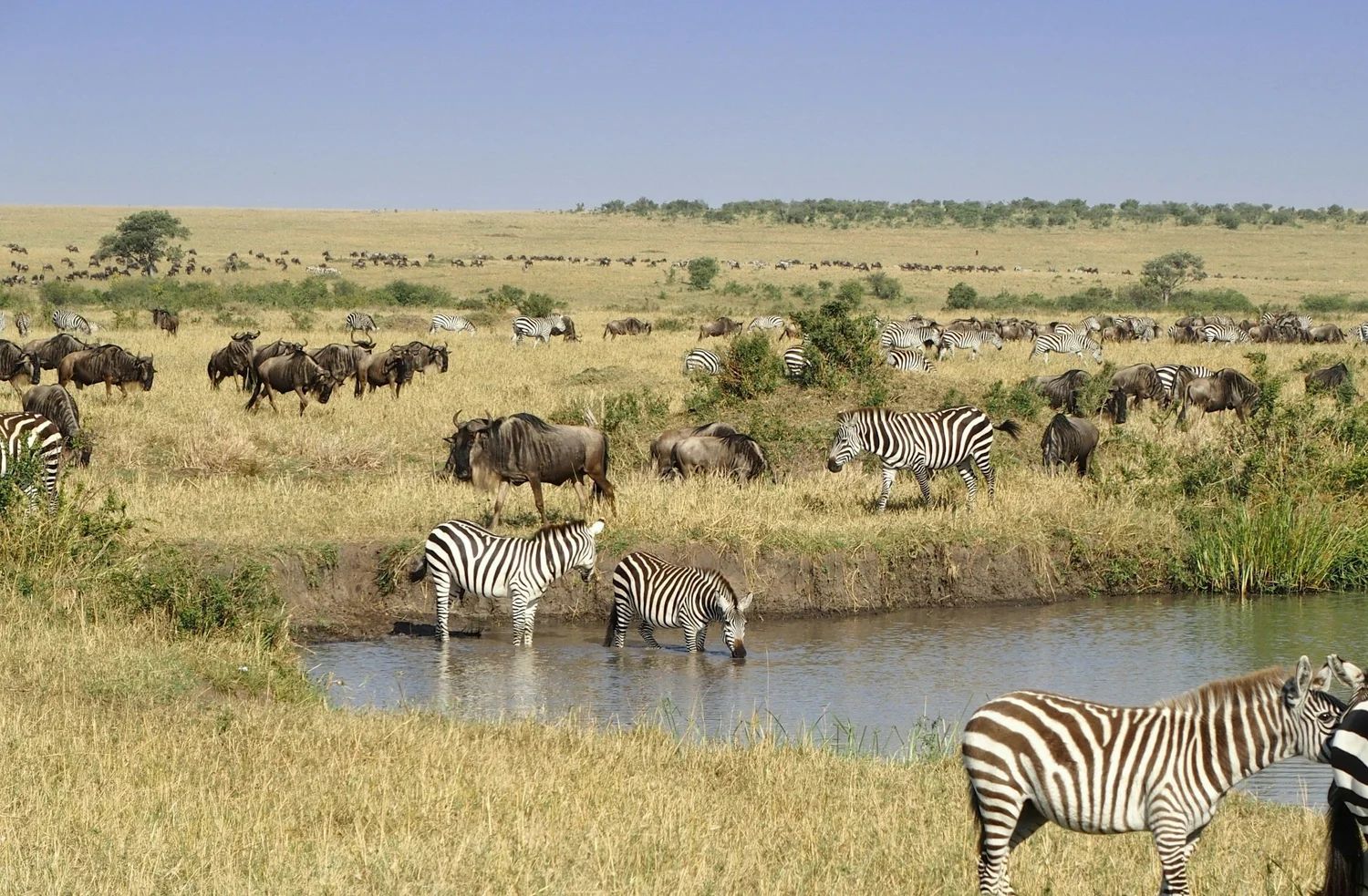
The Ndutu region becomes a focal point during this season, with massive concentrations of wildebeest, zebras, and gazelles spread across the plains. The density of animals creates a dynamic ecosystem where movement is constant and interactions are frequent. Water sources, though seasonal, support the large populations, while the surrounding landscape offers enough grazing to sustain the herds during this critical reproductive period. The concentration of wildlife in this relatively compact area makes it one of the most productive and visually striking environments in East Africa during these months.
Timing and Peak of the Calving Season
The calving season follows a relatively predictable window, but its exact timing can shift slightly depending on rainfall patterns. Late January often marks the beginning, with numbers building rapidly into February, which is typically the peak month. During this peak, thousands of calves can be born each day, creating an almost continuous cycle of birth across the plains. By March, the pace begins to slow as most calves have already been born, and the herds gradually prepare to move on as grazing conditions change.
Rainfall is the key factor influencing this timing. Early or delayed rains can shift the onset of calving, as the availability of fresh grass directly impacts the readiness of females to give birth. This variability means that while the general season is consistent, each year presents slight differences in intensity and distribution. Observing the calving season requires understanding these natural cues rather than relying on fixed calendar dates.
Predator Activity During Calving Season
The abundance of newborn animals during calving season attracts a high concentration of predators, making this one of the most active hunting periods in the Serengeti. Lions, hyenas, cheetahs, and leopards all take advantage of the increased availability of vulnerable prey. Each predator employs different hunting strategies, shaped by both the environment and the behavior of the herds.
Lions often operate in coordinated groups, targeting calves or weakened individuals during moments of separation from the herd. Hyenas, highly adaptable and opportunistic, patrol the plains continuously, scavenging as well as hunting. Cheetahs, relying on speed and open terrain, focus on isolated calves and use the visibility of the plains to their advantage. Despite this intense predation, the overwhelming number of births ensures that a significant portion of calves survive.
This predator-prey dynamic creates a constant sense of tension across the landscape. Herds remain alert, mothers stay close to their young, and movement patterns are influenced by the presence of danger. The calving season thus becomes a powerful demonstration of ecological balance, where life and death are closely intertwined.
Behavior of Wildebeest and Other Herbivores
During the calving season, wildebeest behavior is driven by both maternal instinct and herd dynamics. Females isolate themselves briefly to give birth, often rejoining the herd within a short period. Calves must quickly learn to recognize their mothers and keep pace with the group, as separation can be fatal. This rapid bonding process is essential in a landscape where threats are constant.
Zebras and gazelles, which often migrate alongside wildebeest, also contribute to the ecosystem during this period. Zebras, with their different grazing habits, help maintain grass levels in a way that benefits wildebeest, while gazelles add to the diversity of prey species available to predators. The interaction between these species creates a layered ecosystem where each plays a role in sustaining the balance of the plains.
The herds themselves are not static. Even during calving, there is continuous movement as animals adjust to grazing conditions and avoid areas of high predator activity. This creates a dynamic environment where no two days are exactly the same, and patterns of behavior shift in response to immediate conditions.
Why Calving Season is One of the Best Times to Visit
The Serengeti calving season offers a unique combination of high wildlife density, dramatic predator interactions, and the rare opportunity to witness the beginning of life on a massive scale. Unlike other phases of the migration that emphasize movement, this period focuses on concentration, making it easier to observe large numbers of animals within a relatively small area.
The open plains provide excellent visibility, allowing for extended viewing of behavior without obstruction. This makes it particularly rewarding for photography and detailed observation, as interactions between species can be followed over time. The presence of predators adds another layer of excitement, as hunts and defensive behaviors unfold in real time.
What sets this period apart is the emotional depth of the experience. It is not just about seeing animals but about witnessing the cycle of life in its most raw and immediate form. The contrast between vulnerability and resilience, abundance and danger, creates a powerful impression that defines the Serengeti at its most dynamic.
Practical Considerations for Experiencing Calving Season
Experiencing the calving season effectively requires careful timing and positioning within the southern Serengeti or Ndutu region. Staying close to the plains where herds are concentrated increases the likelihood of observing both births and predator activity. Early morning and late afternoon are typically the most active periods, as temperatures are cooler and animals are more mobile.
Weather conditions during this time can vary, with occasional rains that contribute to the lush landscape. These conditions enhance the visual beauty of the plains but also require some flexibility in movement and planning. Understanding that wildlife behavior is influenced by these environmental factors helps set realistic expectations and enhances the overall experience.
Patience is essential, as the most memorable moments often occur unexpectedly. Whether it is the first steps of a newborn calf or the sudden movement of a predator, the calving season rewards those who take the time to observe and immerse themselves in the environment.