Serengeti vs Maasai Mara: Which is Better for the Migration?
Understanding the Serengeti–Maasai Mara Migration Ecosystem
The comparison between the Serengeti and the Maasai Mara is often framed as a choice, but in reality, both form part of a single, continuous ecosystem that supports the Great Migration. The movement of wildebeest, zebras, and gazelles does not recognize borders, flowing naturally between Tanzania’s Serengeti and Kenya’s Maasai Mara in response to rainfall and grazing conditions. What differs between the two is not the migration itself, but how and when you experience it. Each region offers a distinct perspective shaped by geography, timing, wildlife density, and overall safari dynamics.
The Serengeti is vast, stretching across multiple ecological zones that host the migration at different times of the year. This scale allows it to support the migration for longer periods, including calving, movement, and transition phases. The Maasai Mara, by contrast, is smaller and more concentrated, offering high-density wildlife viewing during the months when the migration reaches its northern peak. Understanding these differences is essential when deciding which destination aligns better with your expectations and timing.
The Serengeti: Scale, Diversity, and Year-Round Migration
The Serengeti offers one of the most comprehensive migration experiences because it hosts the herds for the majority of the year. From the southern plains during calving season to the central corridors and northern river systems, the migration unfolds across different landscapes that each present unique wildlife interactions. This diversity means that the Serengeti is not defined by a single highlight, but by a continuous sequence of ecological events.
One of the greatest strengths of the Serengeti is its scale. The vastness of the landscape allows herds to spread out, creating a more natural and less crowded viewing experience. Even during peak migration phases, it is possible to observe wildlife without the sense of congestion that can occur in smaller areas. The variation in terrain, from open plains to woodland and riverine environments, also supports a wide range of species, making the experience more varied beyond just the migration itself.
The Serengeti is particularly strong during the calving season from January to March, when the southern plains come alive with newborn wildebeest and intense predator activity. It also plays a critical role during the transition months, offering insight into the less dramatic but equally important phases of movement. For those seeking a deeper, more extended understanding of the migration cycle, the Serengeti provides unmatched continuity.
The Maasai Mara: Density, Accessibility, and Peak Drama
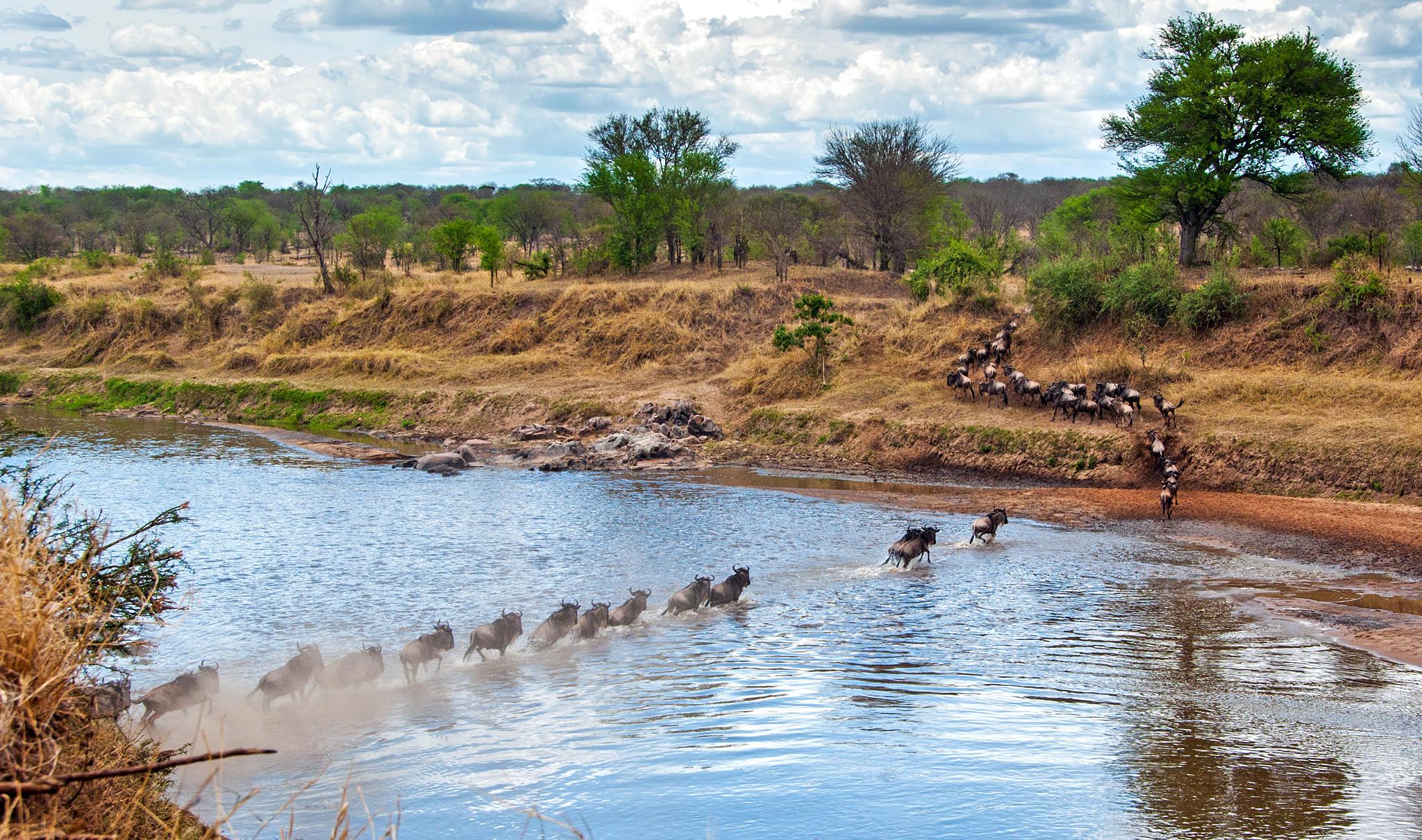
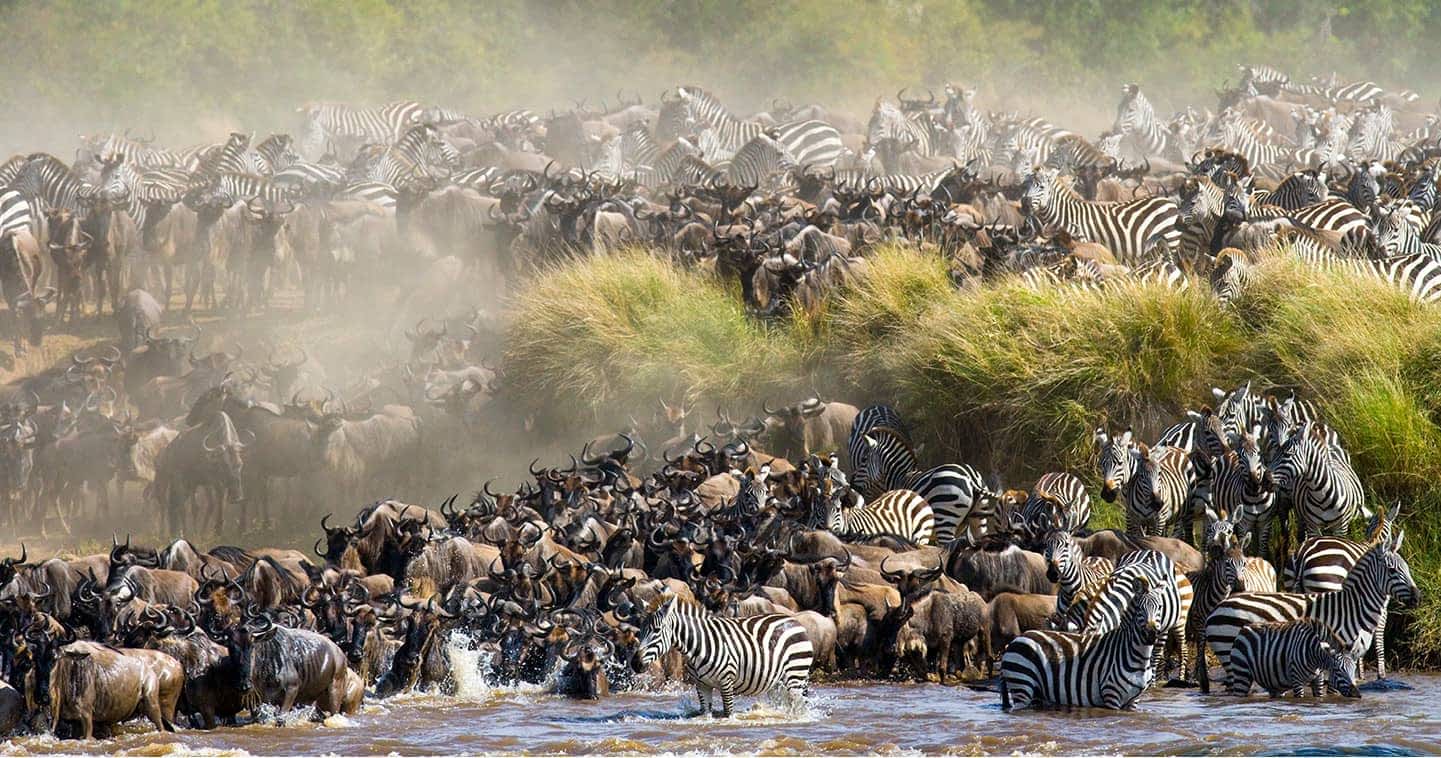
The Maasai Mara is most famous for delivering the most concentrated and visually dramatic phase of the migration, particularly between July and October. During this period, large herds move into the Mara, often gathering near river systems where crossings occur. The smaller size of the reserve means that wildlife is more densely packed, increasing the likelihood of frequent and close-range encounters.
One of the key advantages of the Maasai Mara is accessibility. The infrastructure is well developed, allowing for efficient movement between different areas and reducing travel time during game drives. This makes it particularly suitable for travelers with limited time who want to maximize wildlife sightings within a shorter stay. The density of animals also attracts a high concentration of predators, resulting in regular hunting activity and dynamic interactions.
River crossings in the Mara are among the most iconic moments of the migration, drawing global attention for their intensity and unpredictability. The combination of large herds, confined river crossing points, and predator presence creates a level of drama that is difficult to match elsewhere. For those seeking high-impact wildlife moments within a defined timeframe, the Maasai Mara delivers a powerful experience.
River Crossings: Serengeti vs Maasai Mara
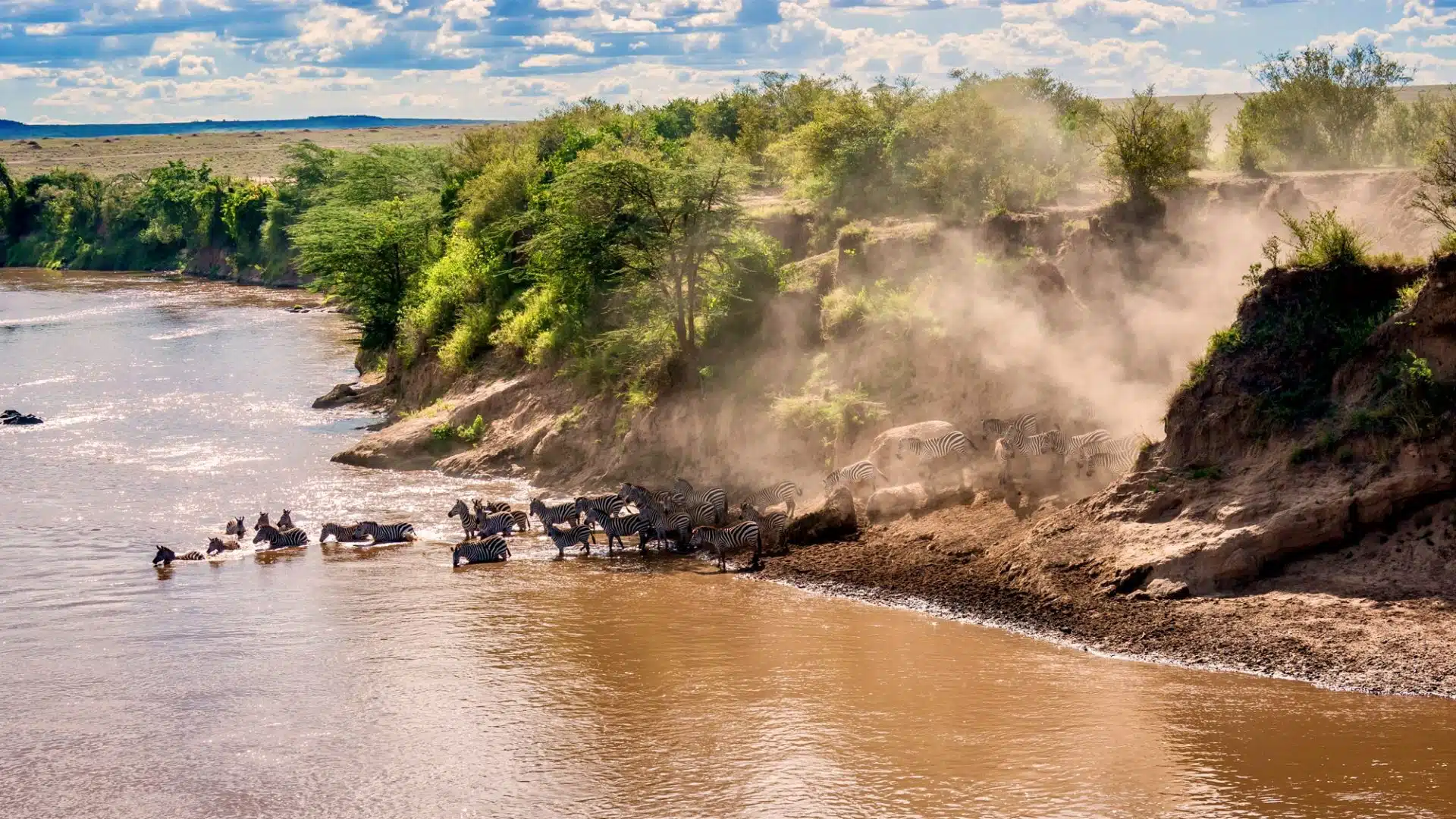
When it comes to river crossings, both regions offer exceptional opportunities, but the experience differs in subtle ways. In the northern Serengeti, crossings tend to feel more remote and less crowded due to the larger landscape and lower vehicle density. The setting is expansive, with multiple crossing points along river systems that can spread activity across different locations.
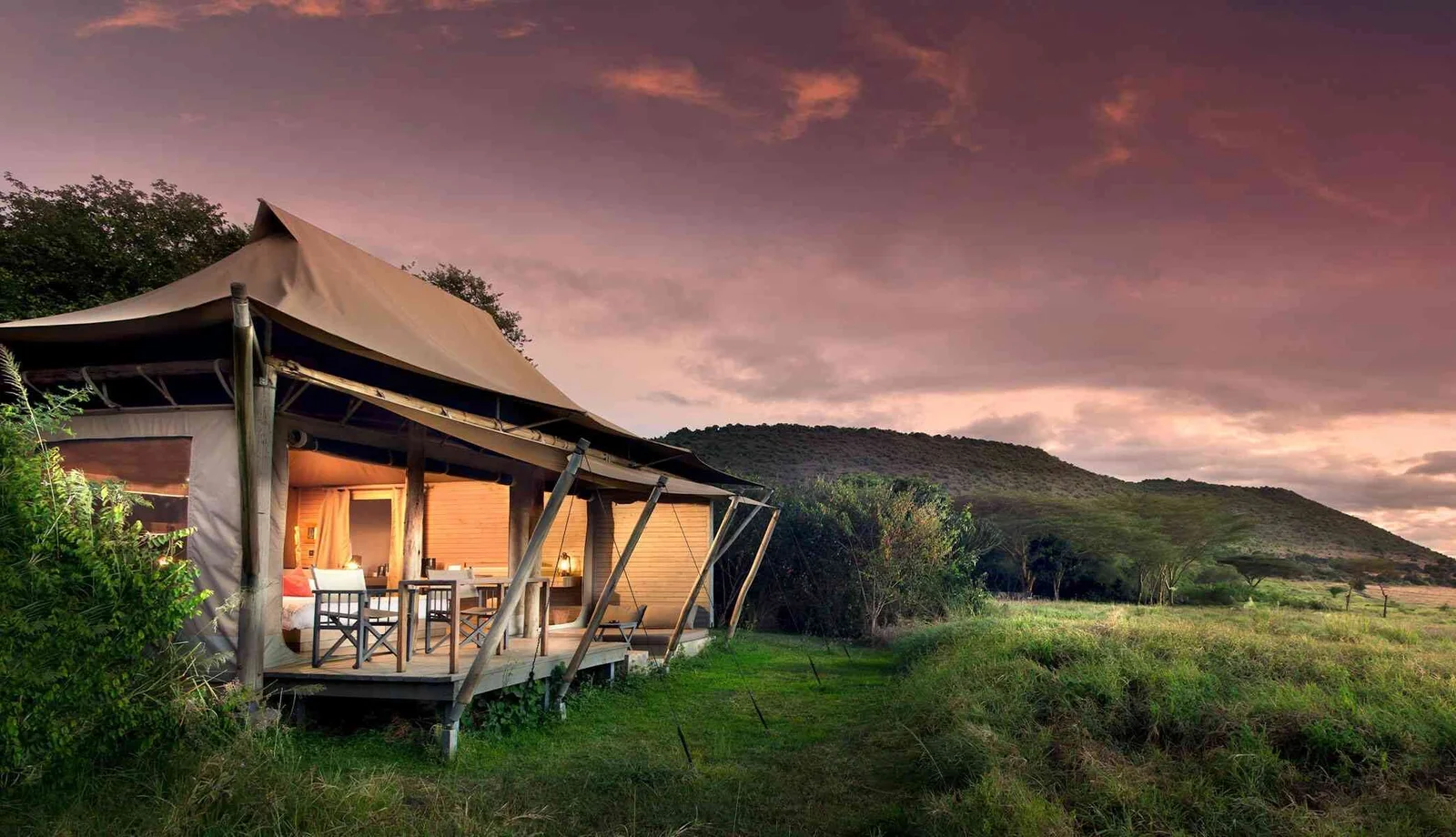
In the Maasai Mara, crossings often occur in more concentrated areas, which can increase the intensity of the viewing experience. The proximity of lodges and camps to key river points allows for quick access, making it easier to respond when crossings begin. However, this concentration can also mean more vehicles gathering at popular spots, particularly during peak season.
The unpredictability of crossings remains constant in both regions. Herds may approach the river multiple times before crossing, and movement can shift quickly depending on pressure and environmental conditions. Choosing between the two often comes down to whether you prefer a more remote and expansive setting or a more concentrated and accessible one.
Wildlife Experience Beyond the Migration
While the migration is the main attraction, both the Serengeti and the Maasai Mara offer rich wildlife experiences beyond the movement of herds. The Serengeti’s size and ecological diversity support a broader range of habitats, which translates into varied wildlife encounters throughout the year. From large predators to smaller species and birdlife, the ecosystem provides depth and variety.
The Maasai Mara, despite its smaller size, delivers consistently high wildlife density. This makes it easier to encounter a wide range of species within a shorter period. Predator sightings are particularly strong, with lions, cheetahs, and leopards frequently observed in action. The Mara’s landscape also lends itself to open viewing, making it easier to follow animal behavior across distances.
The difference lies in the style of experience. The Serengeti offers exploration and variation, while the Maasai Mara emphasizes concentration and frequency of sightings.
Which is Better for the Migration?
The answer depends entirely on what you are looking for in your safari experience. If your goal is to follow the migration across different phases, including calving, movement, and river crossings, the Serengeti provides a more complete and immersive journey. Its scale and diversity allow for a deeper understanding of how the migration evolves over time.
If, on the other hand, you are focused on witnessing the most dramatic moments within a limited timeframe, particularly river crossings and high predator activity, the Maasai Mara offers a more concentrated and accessible experience. The likelihood of frequent encounters is higher due to the density of wildlife and the compact nature of the reserve.
Ultimately, neither destination is inherently better than the other. They complement each other as parts of the same ecosystem, each offering a different perspective on the same natural phenomenon. The best choice is determined by timing, priorities, and the type of experience you want to create.